Search This Blog

Sunday, May 1, 2016

Fail Forward


Failure is an essential 21st Century skill. I know that this sounds like an odd statement, but we need to do a better job of teaching our students how to fail ... and fail forward.

C.S. Lewis, coined the phrase, "fail forward" with his quote on success:"Failures, repeated failures, are finger posts on the road to achievement. One fails forward toward success." 

Failing Forward

Adults often rush in to "save the day" for children. This is an inherent quality of parents and teachers ... we hate to see children fail. However, by interceding too early and too often, we eliminate powerful life lessons for children. I'm concerned that our over-protective, "everyone gets a trophy" society is going to produce adults who do not know how to learn from failures. In fact, we fail to learn (pun intended).

Can you imagine a future world where scientists don't learn from their mistakes?  Einstein and Edison were two who knew the power of failing forward. We need to ask why we failed, what caused our failure, and how to improve in the future ... and that learning only happens after we fail.

In her book, Mindset: The New Psychology of Success (2006), Carol Dweck presents the difference between a growth mindset and a fixed mindset. In a very short summary, a growth mindset is one that wants to fail forward and grow from mistakes. Check out Dweck's 10 minute Ted Talk on the power of a growth mindset in school.

The word "failure" has such a negative connotation (especially in schools), and a person who fails is seen too often as a "loser." How can we celebrate failing forward in schools? Carol Dweck, in her Ted Talk, refers to a school that has replaced an "F" grade with "Not Yet." What a powerful, growth mindset message this sends to students! Students need to realize that failure is part of the process of learning, and when they receive a "Not Yet" grade, they need to keep working. A "Not Yet" mentality encourages grit/perseverance, an essential characteristic for success.

So, how do we teach students to fail forward?

Classroom Applications

1. Reflect on what some of these "losers" had to say about "failure"

Write one of the following quotes on your board tomorrow morning, discuss the potential learning power of failure, and share how to fail forward.
  • "Failure happens all the time. It happens every day in practice. What makes you better is how you react to it." -Mia Hamm
  • "Failure isn't fatal, but failure to change might be." -John Wooden
  • "I have not failed. I've just found 10,000 ways that won't work." -Thomas Edison
  • "Success is not final, failure is not fatal; it is the courage to continue that counts." -Winston Churchill
  • "Success is stumbling from failure to failure with no loss of enthusiasm." -Winston Churchill
  • "The only real mistake is the one from which we learn nothing." -Henry Ford
  • "Failure is only the opportunity to begin again, only this time more wisely." -Henry Ford
  • "There are no secrets to success. It is the result of preparation, hard work, and learning from failure." -Colin Powell
  • “It is fine to celebrate success, but it is more important to heed the lessons of failure.” -Bill Gates
  • “I’ve missed more than 9,000 shots in my career. I’ve lost almost 300 games. Twenty-six times I’ve been trusted to take the game winning shot and missed. I’ve failed over and over and over again in my life. And that is why I succeed.” -Michael Jordan
  • "Failure is success in process." -Albert Einstein
2. Create a safe environment
  • Ensure students have the opportunity to express ideas without ridicule
  • Implement risk-taking and problem-solving into your curriculum
  • Focus on formative assessment; provide regular "not yet" conversations with students and provide meaningful feedback on how to improve.
  • Provide opportunities for students to collaborate with others to correct work, peer edit, and revise "not yet" work.
3. Change your educational paradigm to encourage Failing Forward.  Here are a few articles/websites to get you thinking.
Go fail forward with your students this week!

Saturday, April 16, 2016

You Play Ball Like a Girl -- Escalating Conflicts

Conflicts happen in life, and we need to deal with them. Therefore, when conflicts happen at school, educators have a perfect opportunity to help our students learn how to manage conflicts in a healthy way.

As I watch the political process this year, I am reminded that some adults need to learn the same lesson that I try to teach my students: Don't escalate conflicts.

One of the classic lines from The Sandlot is "You play ball like a girl!" This line comes after a plethora of insults between the Sandlot team's catcher Hamilton "Ham" Porter and their opponent. You can see that scene from the movie HERE with the escalation occurring at 1:15. Whether you agree with this statement as an insult or not, it was clear to both teams that this insult escalated the conflict to a new level.

Playground arguments and conflicts happen, but they don't often come to my attention as the principal unless someone escalates the situation. As a principal, I use "restorative practices" to encourage students to make better decisions. I usually end the discipline conversation with having the student consider future actions and how they would handle the situation differently if/when this happens again. The conversation often turns to discussing the different ways to escalate or de-escalate a situation.

In a school setting, annoying behaviors can escalate into an exchange of ever-increasing harsh words and then into a physical altercation. In this situation, discipline and restorative practices can revolve around who escalated the situation and a better way to handle the situation in the future. I wish that conflicts were still that simple.

Social Media
Today, conflicts quickly escalate through social media. A face to face insult becomes a flaming post on social media. It is amazing how courage grows when students jump online. Even though both are insults, the public nature of social media escalates the situation and borders on public disparagement and libel. Unfortunately, if you work in a middle or high school today, you have heard the term cyberbullying and have probably dealt with the ramifications.

(Ironically, the term "bullying" is often misused and always escalates the situation. See the CNN article for more on this conversation.)

It is easy to pick on students in this post, but adults escalate situations with words and actions too. As role models for our students these action speak loudly in shaping student beliefs on the topic.

Emails
Adults are bolder communicating online also (aka, email muscles). As a principal, I occasionally receive an angry email and, to be honest, my first response is to respond in kind. However, it is amazing to see the tone shift when I call a parent (or ask for a face-to-face meeting) about an angry email. Usually, we can come to some resolution without raised voices.  Another way that we can escalate the situation in emails is through the "strategic cc" ... a parent cc'ing the principal, superintendent, and school board in the first email to the teacher. The strategic cc escalates the situation and is rarely productive.

Nouns instead of Adverbs
Another way that adults escalate situations is by quickly changing adverbs into nouns. A student who "acts foolishly" is not necessarily a "fool." I recently sat through a presentation by an educational leader who, in the midst of his talk, called students "idiots" as he described a prank that they pulled. Their actions may have been idiotic (actually, the prank was quite ingenious), but he has escalated the situation by labeling them "idiots." I cannot imagine a restorative resolution to a conflict that begins with calling students "idiots." You may think that this is just semantic gymnastics, but there is no argument: words can escalate situations.

So don't escalate conflicts; keep the situation and tone on the same level, eg. words should not turn physical, and debates should not involve name calling. This will help conflicts remain manageable.

De-Escalate the Situation
Not escalating a conflict is only half the battle; we should also actively de-escalate a situation.

  • Soften your Tone.  Proverbs 15:1 states, "A gentle answer turns away wrath, but a harsh word stirs up anger." Live this and see how this changes conflicts.
  • Be Humble. Listen first and be ready to admit wrong; humility can do amazing things to help resolve a situation. Relational restoration is much closer when both parties consider how they could've acted differently.
  • Take Some Time. Instead of dealing with something in the heat of the moment, set up a meeting for a future time. Sometimes time and space is all that is needed to resolve a conflict.
  • Go Private/Stay Private. Being in the "public square" (whether that is in a full classroom or on social media) escalates a situation; find a quiet, private location to resolve a conflict confidentially. The situation changes if you meet with a disrespectful student after class or if you move a conflict between two students from the hallway into an office. Make sure that the situation stays confidential, informing only those who need to know.
  • Invite a Neutral Mediator. The Matthew 18 Principle for conflict resolution is definitely effective, but only if the "mediator" is truly a neutral party and a calming personality to the conversation. If one of the parties feels that he/she is being "ganged up on" or threatened by the third party, the situation will escalate. (sometimes when a principal attends a parent/teacher conference, the situation is escalated by the principal's presence)
Conflicts are messy, and there is rarely one right answer to any situation. However, teaching our students to be civil with each other through arguments and disagreements is a vital building block for our democratic society. Unfortunately, some of our leading presidential candidates escalate situations every time they open their mouth or produce a campaign ad.

If only they read my blog!

Sunday, March 6, 2016

What's the Point?

My school is celebrating her 100th birthday, and I have been asked to write a "purpose of education" article for the celebration in April. As a process thinker/writer, I thought I'd blog as I brainstorm ideas for this article.

One of the most common questions that we get from students is “what’s the point?” It is usually followed by its ugly sister, “why do we have to study this?” While these questions may be annoying at times, they demonstrate that our students are really insightful, are thinking teleologically, and understand the importance of purpose and meaning in life. Unfortunately, we often do not respond with an answer that truly values these questions.

Teleology -- 
(from Greek telos, meaning end or purpose) 
is the philosophical study of nature by attempting 
to describe things in terms of their 
apparent purpose, directive principle, or goal.


So, what's the point? Let me begin with what is NOT the purpose of education.
  1. The purpose of education is NOT to “get smart.” We are not just training students to have head knowledge so that they can do well on Jeopardy or dominate friends in Trivia Crack. Students in the 21st Century have every fact on their phone, ready to be “googled” at a moment’s notice. Although students in school will still memorize facts, acquiring knowledge and getting smart is not a purpose in education.  
  2. The purpose of education is NOT to get wealthy. Often when asked about a school, parents respond: Johnny is getting a good education so that he can get into a good college. When pressed further with “what’s the point of getting into a good college?”, they respond with ... to get a good job (“good” being defined “as one with a high salary”). Thus, begins the cycle of education today … students go to a good school to get into a good college to get a good job to make a lot of money so that their children can go to a good school, continuing ad nauseum. Unfortunately, this common perspective of education doesn’t answer the teleological question for education (unless your ultimate goal is “to make a lot of money”).
  3. The purpose of education is also NOT “to live a comfortable life.” I call this the John Wayne principle of education, based on his quote: “Life is tough, but it is a whole lot tougher if you are stupid.” Many in our society believe that education has been established to help us live in comfort and ease. Although education does provide intellectual resources to problem solve, living an easy life is not the purpose of education.
  4. Finally, the purpose of education is NOT to prepare students for a job. This may be the most difficult one to counter as “job preparation” seems to be the main reason for education today, especially at the college level, i.e., your major better prepare you for a job after graduation. We do prepare students for future employment, but we want to prepare them also for life more broadly.
So, what is the point of education? Let me begin with the premise that flows from the last point above, schools should educate for life. Our purpose in education should reflect our purpose in life; the answer to “what’s the point?” should be the same for education and life. Let me give you a quick example from a bumper sticker. 
Image result for he who dies with the most toys wins
If your purpose in life aligns with the bumper sticker above, then your education should prepare you to make money and acquire material things. My point being that we should educate for life, and an educational purpose statement should align with a life purpose statement.

Schools need to think broader and more teleologically with mission statements. To quickly summarize, let me counter the reasons above.

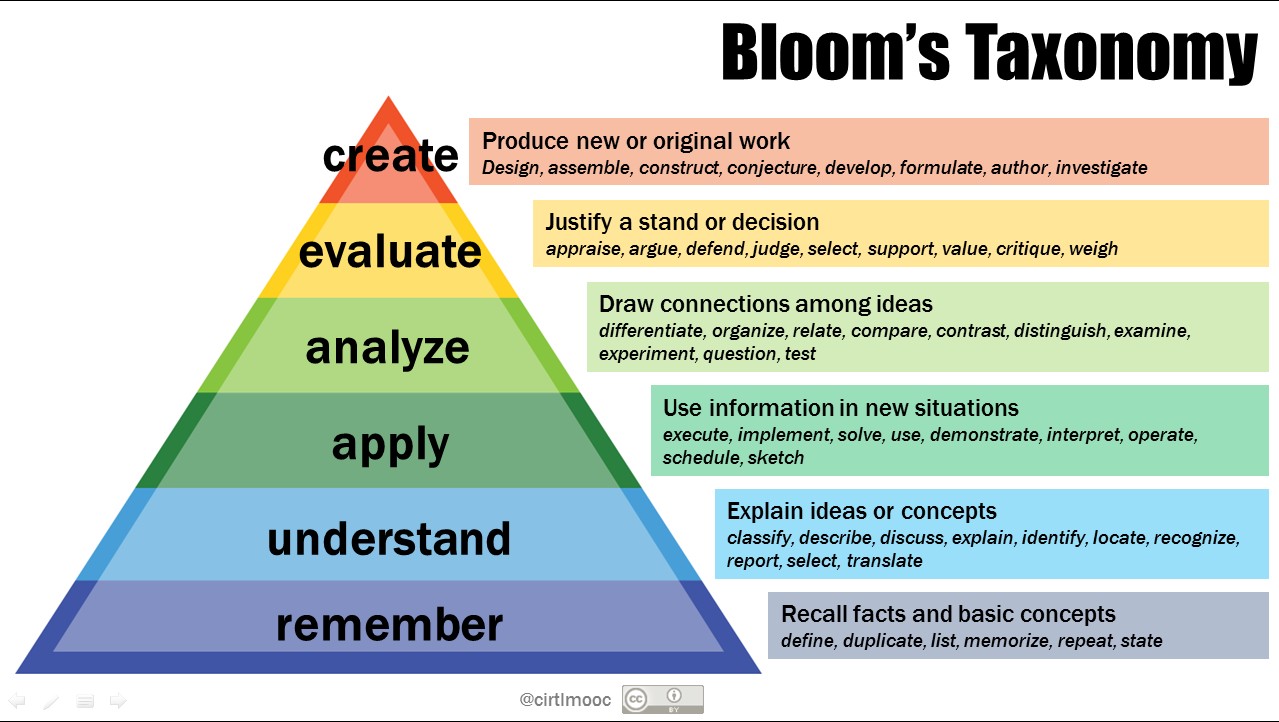
1. Education is not to “get smart.” Instead of knowledge acquisition and memorizing facts, education should focus on using the knowledge that is readily available to students. Education in the 21st Century must focus on the higher levels of Bloom’s taxonomy and de-emphasize learning facts, as the first level (at least) is provided through technology. Analyzing if that information is accurate, valid, and reliable and then using that information is more important in our technology age.
2. Education is not to get wealthy. While being compensated well with a high salary may be a by-product, it should not be our purpose or end goal in life. I like to point out the difference between affluence and influence. Affluence being “the state of having a great deal of money”; influence being “the capacity to have an effect on the character, development, or behavior of someone or something.” A teleological focus ought to be larger than just making money; it should consider using your position to make changes in your sphere of influence. The goal of education and life is to make a difference, change attitudes, behaviors … essentially leave the world better than what you found it.

3. Education is not to be comfortable in life. Closely connected to the second reason, our goal in life or in education should not to be comfortable. Often the important changes (in both our character and our culture) come through adversity and trials. Consider the Civil Rights movement; what a different world we would currently be living in if Rosa Parks and Martin Luther King Jr (and many others) decided to avoid conflict. How stagnant our world would become if we all took the easy road and avoided difficulty.

4. Education is not to get a job. This is misguided as a purpose of education for a couple of reason: first, according to the Bureau of Labor Statistics, people will hold an average of 11 different jobs during their lifetime (others have cited the number as 7 different careers). By preparing for a specific job, the purpose of education will only last a few years. Second, industries (especially those driven by technology) change so frequently, that specific job preparation in college is often obsolete shortly after a student graduates from college. Third, education solely for job preparation is rather short-sided. Even, if an individual remains in a job for his/her entire career, hours spent working are only 15% of life. There is so much more to life than work, and education should prepare students for all of his/her callings.


So what is the point of education? The answer should begin with focusing on what is the point of life?


Most of us do not think teleologically by nature; instead, we are trying to get through the day. But, this is an important practice to model for students and to teach intentionally to students. An easy way to do this is to look at the school’s mission/purpose statement and discuss with students how specific assignments help you fulfill the mission statement. Unfortunately, you will find many school mission statements that are not teleological and focus on the objections that I listed above. 

Here are a few other resources to help students think about purpose statements.

Image result for eagle scoutEagle Scouts -- one of the requirements of an Eagle Scout is to write a “statement of ambitions and life purpose.” Find exemplars of those statements and encourage students to write their own.


This I Believe -- listen to some examples from NPR’s series, “This I believe” and read examples from the “This I Believe” website or book that grew out of the series. There are great resources for educators on these websites. Produce a “This I Believe” podcast with your students.


Consider Communities of Faith -- While difficult for a public school to embrace a religious purpose statement, encourage students to talk with their parents and family about their specific faith background, as often religion helps us to think about purpose in life … and what a great discussion that this will lead to at home. As a Christian, one thing that helps me think about the purpose in life (and the purpose of education) is reading the Bible. For example, the Bible has a number of life purpose statements, like Micah 6:8 …
 Image result for cross bible
"What does the Lord require of you?
To act justly and to love mercy 
and to walk humbly with your God."
That is a powerful purpose statement for life. Wouldn't it be amazing if our education helped students to act justly, love mercy, and walk humbly?

My purpose in this blog post is to encourage us, as educators, to do a better job answering the annoying but important questions from students of "what's the point?" and "why do we have to study this?" ... and no, "because I said so" is not a good enough answer.

Each school and educational leader should have their own educational purpose statement that drives everything that they do.

If nothing else, find your school's mission statement, reflect on what it says about the purpose of education and life, and design assignments to help fulfill your mission statement. Hopefully, you can encourage your students (and your colleagues) to think from a teleological perspective.

Sunday, February 21, 2016

Chaperoning Dances and Leadership


A part of being a high school principal is chaperoning dances. If you have awesome students like I do, this task ends up providing four hours of reflection. Our recent Sadie's dance reminded me of my favorite leadership metaphor.

Leadership gurus Ronald Heifetz and Marty Linsky, in their book Leadership on the Line, challenge leaders to be both on the dance floor and on the balcony. To summarize, being "on the dance floor" means being involved in the day to day operations, while being "on the balcony" refers to stepping back from the details to oversee the organization from a more global perspective. Often leaders are more comfortable either on the dance floor or on the balcony; however, what makes this metaphor so powerful is the fact that leaders need to do both. Top leaders are daily going up and down the metaphorical stairs from the balcony to the dance floor.

In education, the dance floor / balcony metaphor is especially pertinent. It is essential for school leaders to be active and visible in the classrooms and at concerts ... and yes, even being a chaperone at a dance. But, it is equally important for school leaders to spend time in the office and at meetings, working to make sure policies, procedures, calendars, and communication are in place so that the school can thrive.  

Get on the Dance Floor

I am an introvert, so I have to tell myself to "get on the dance floor" multiple times a day. It is so easy for me to sit in my office working on the next meeting agenda, policy change, accreditation document, or school improvement plan. However, when I am greeting students as they arrive, walking through classrooms, chatting with students and teachers in the hallways between classes, and attending school events at night, my leadership is enhanced. As I spend time on the "dance floor," I am re-energized by my time observing the great things happening in the classrooms and visiting with amazing students; it has become a revitalizing break from my "balcony" work. One of the responsibilities of the administrators at my school is to manage the car line at the end of the day. While I don't relish donning my fluorescent yellow vest and directing traffic, this task really helps my visibility with parents and students and gives me a front row seat to the daily operations of pick-up. Here are a few "principal" tasks that force me onto the dance floor ...

  • Welcoming students as they arrive
  • Observing classroom / learning environments
  • Delivering notes/lunches to students for the office staff
  • Scheduling classes with students
  • Having lunch with students after their 4th tardy
  • Supervising athletic contests at night
  • Co-teaching a class
  • Making opening comments at a music concert
  • Helping with carline and parking lot duty

Get on the Balcony

As I mentioned in the dance floor paragraph, I am an introvert, so the balcony is a comfortable place for me to be. However, some administrators enjoy "dancing" and need to be reminded to step back and take care of the "balcony" duties. One of the most important roles of a principal is to handle the behind the scenes details so that teachers can teach and the school can run smoothly. This involves implementing effective policies/practices, handling discipline, communicating with parents, and promoting the school. "Balcony" work also requires thinking strategically and from a teleological perspective. One of my jobs is to chair the school improvement team; this position involves setting goals for the school, conducting program evaluations, and taking a pulse of the school through parent and student surveys. Setting initiatives that promote innovation and improvement are an important part of being an effective school leader; encouraging professional development and setting aside resources to achieve those initiatives is equally important.  Here are a few principal tasks that require that I stay on the balcony ...
  • Setting the school calendar/schedule
  • Developing the parent/student handbook
  • Creating an effective professional development program
  • Managing the educational budget
  • Conducting teacher/staff evaluations
  • Overseeing student assessment
  • Managing accreditation
  • Serving on admin and school committees
  • Communicating with parents and the greater community

I am preaching to myself with this blog post. I am not a great dancer (figuratively and literally) and need to have "Get on the Dance Floor!" in big, bold words on my desk to remind me of this metaphor. 

It is encouraging to see other educational leaders living this metaphor well. A friend of mine, who is also a principal, arrives early and stays late to work in his office on "balcony work" so that he can spend the hours of the school day outside of his office on the "dance floor."  He understands this metaphor and has found a way to do both every single day.

Enjoy the dance!

Sunday, February 14, 2016

Every Student Every Day

Every Student Every Day (or beware of the blurters)

One of the education mantras that I use with my teachers is "Every Student Every Day." This phrase was one that I initially had to tell myself as a teacher, but its power has been reinforced now that I am a principal observing classrooms.
When I taught high school, blurters dominated my classroom, and I was okay with that because the blurters were my best students. Blurters were the students eager to answer ... like Horshack with Mr. Kotter. I would ask a question or begin a discussion and two or three students would be eager to answer; I would call on them or let them shout out the answer. This worked well. I often ended class feeling really good about the lesson because students were engaged, they understood what I intended them to learn, and they were dutifully paying attention (or at least a few of them ... the blurters).
I realized that this was a problem when I forgot to take attendance until after class. Once the students left the classroom, I literally couldn't remember who (other than the blurters) were in my class a few minutes earlier ... so I guessed on the attendance, and I guessed wrong. 
Worse than incorrect attendance, I realized that I had no clue if the majority of students were intellectually present. Thus, my solution became "Every Student Every Day" (ESED). I have to admit that classes did not go as smoothly ... discussions became halting and difficult, and I couldn't count on the right answer when I called on a non-blurter. But, I knew that I was reaching and teaching a higher percentage of students.
So how can teachers reach ESED? ... of course, asking every student a question during the class period is one way, but there are so many more creative ways to reach ESED: entry (anticipatory set) questions, exit tickets, check-ins, pair-share, reading around the room, quick quizzes, and discussion circles are a few suggestions.

The Benefits of ESED
Formative Assessment -- One thing that I noticed after I began practicing ESED was how many of my students were not learning and needed reteaching. This is the essence and the importance of formative assessment, knowing if students are learning. While formative assessment is a huge topic worthy of a future blog post, an ESED policy is an essential key to formative assessment.
Building Relationships -- Teachers are mentors and role models for students. While some of this is inherent in the position, teachers who really want to impact the lives of their students need to connect with them daily. Unfortunately, we hear too often of students "falling through the cracks" or spending the day unnoticed. How amazing it would be if every student was guaranteed multiple conversations with adult role models every single day.

Improved Classroom Environment -- One of the classroom observation tools that I utilize is the ELEOT (effective learning environments observation tool), developed by AdvancEd. It is amazing how the practice of ESED improves the overall classroom environment. The classroom learning environment is equitable, supportive, and active; teachers are able to monitor learning and provide feedback to help all students succeed. The ELEOT almost fills itself out when a teacher embraces an ESED perspective.

It may seem like a very simple suggestion, but ESED transforms a classroom environment, improves teacher/student relationships, and improves learning.  If you are a teacher, give it a shot!

If you are an administrator, try to connect with every teacher every day (something that I need to work on).