Search This Blog

Monday, January 21, 2019

Nautical Leadership -- Rocking the Boat or Steadying the Ship?


Denver Christian Homecoming Boat Races 2018
Most of us have experienced the difficulty of trying to balance in a canoe, especially when stepping from the dock into the small boat. If your friends are already in the boat, you scream at them "Don't Rock the Boat!" as the adrenaline pumps through your body, trying to avoid the ultimate humiliation of falling into the lake. 

It is hard enough to balance yourself in a one-person canoe, but it can become exponentially more difficult with each additional person. Being in a 2- or 3-person canoe with friends, someone inevitably tries to "rock the boat" while the others try to counter in order to "steady the ship." This is part of summer fun, but does this happen in organizations and in leadership? What role does a leader play in this canoe metaphor?

Two maritime metaphors surface when thinking about leadership ... leaders that "rock the boat" or those that "steady the ship." The examples come from school leadership, but the principles are universal in leadership.

Embarking

It is most difficult to keep your balance when you are first stepping into a small vessel. In fact, this is not only treacherous for the person embarking, but also for those already on the boat. The boat will rock, and it is important for those in the boat to steady the ship. Depending on those already in the boat, this process can be a smooth, safe step or a disastrous spill into the water. One thing that I look for when embarking is a literal helping hand from someone already in the boat.

On-boarding new staff members is also a crucial step and current staff (those already in the boat) need to provide a helping hand as well as stability as a new person joins the crew. No matter what position (staff, faculty, paraprofessional, administrator, or head of school), an intentional on-boarding process is essential to a smooth transition. Welcome picnics, staff bonding, social gatherings (for the new employee and his/her family) provide the helping hand into the institutional "boat."

After the welcome and orientation, leaders need to focus on stability. Stability comes in many forms ... clear expectations, assistance offered, frequent face-to-face conversations, being present and available. Additionally, providing a support structure via a mentoring program will help the staff member adjust to waves that will inevitably come. A mentor, ideally, should be someone who has been in the institution for some time and has weathered the storms well to assure the new staff member that calmer seas lie ahead.

Rock the Boat

Often, a new leader is hired when the board decides that a change in the direction of the organization is needed. To use another nautical reference, to change course. Logically, a change agent is hired with directives to make changes; however, can you change the course of an institution without rocking the boat? Probably not ... but an effective leader will make sure to steady the ship during the turbulence.

Visualize sitting in the middle of a canoe with 2 other people, enjoying a day on a calm mountain lake. Suddenly, the person in the back of the canoe stands up, scrambles over you, and moves to the front of the canoe. This will, of course, rock the boat and put everyone at risk of capsizing. Changing positions in a canoe is sometimes needed for a variety of reasons; however, if the person, in this scenario, would communicate the change early and notify everyone before moving, the others in the canoe would be able to steady the ship during the change.

Similarly, a leader can unnecessarily rock the institutional boat by acting rashly and by not communicating. Most agree that institutional change needs to happen, especially in educational settings as they strive to prepare students to enter an ever-changing world. So, if change is needed, and if change will most likely "rock the boat," how can a leader steady the ship?

Steady the Ship

As mentioned previously, if a leader, in a metaphorical canoe, communicates early and prepares everyone for change, the process can be as smooth (and effective) as possible. Preparing staff members for change is essential, and that means anticipating difficulties (the waves that may rock the boat), gleaning advice from others who have sailed those waters before, and having the humility to learn from others. Additionally, a calm demeanor the demonstrated by the leader will instill confidence both in the organization and in the leader. All of these elements will inspire staff members to work together to help the organization and each other thrive through change. Finally, what is assumed in all of this, is that the leader is present, actively working with staff; unfortunately, many leaders "jump ship" or abandon the crew when the organization is facing rough seas ahead.

It is essential for a leader to focus on steadying the ship rather than rocking the boat. If this is the focus, confidence will trickle-down and inspire staff, students, and the school community through changes.

Wednesday, October 31, 2018

Pounding on Church Doors

What would cause you to "pound on the church door"?

Criticizing church seems to be a favorite Sunday afternoon pastime for Christians today. In our futile search to find the perfect church, we take great license in criticizing every aspect of the church service, the pastor, and church members.

On the way home from church, the diatribe usually begins ...

The music is too loud; the music is too boring. The sermon is too long; the sermon was too superficial. Children should stay in church; children are a distraction. I hate how they play music during the prayer; I love how they play music during the prayer. Young people need their own age-appropriate message; young people should listen to the main sermon. Old hymns need contemporary tunes; don't change the old hymns. We should come forward to take communion; we should sit and take communion together. The pastor should wear a tie; the pastor should not wear jeans; the pastor should dress casually.

I'm sure that Martin Luther in the 16th Century had many complaints about his church, but what caused him to take the drastic step to publicly post his 95 theses on the church door? He had to know the risk that he was taking ... a couple objections would lead to a debate; 95 objections is going to lead to excommunication (or worse). What tipped the scales from annoyance to action? What caused him to pound on the church door?

He was driven to action when the church was promoting a salvation heresy. Luther's main objection in 1517 was the selling of indulgences to spring souls out of purgatory and into heaven.

Luther and many of the other reformers preached the solas of salvation ...
Instead of preaching salvation through the purchasing of Indulgences, Martin Luther and the reformers preached salvation by Grace ALONE, through Faith ALONE, in Christ ALONE.

Indulgences was not a minor "worship war" issue (e.g., pitting praise songs vs. hymns), it was a salvation heresy; thus, it caused Martin Luther to pound on the church door.

Another time in church history in which the institutional church promoted a salvation heresy was during the Crusades. A papal bull (or official church decree) was established providing indulgences for anyone who went on a crusade ... essentially guaranteeing salvation to any of the "crusaders."  Unfortunately, nobody stepped up to pound on the church door during this time to object to this heresy.

We don't need to pound on the church door when we disagree with certain things in the church ... minor interpretations of scripture, worship styles, preaching style ... in those things, we should seek to live in harmony (Romans 12:16).  However, when official church statements promote salvation heresies, we need to stand up and pound on the church door. .

When the church "preaches" deviations from the gospel message of orthodox Christianity (salvation is by grace alone, through faith alone, in Christ alone), then we need to pound on the church door in objection. Although more subtle than selling salvation, the modern church does peddle the message that Christ's work is not enough. Christians need to do certain things and act certain ways to earn salvation. Have you heard a "cross plus" salvation message? i.e. Salvation = the work of Christ on the cross + our works.

Can you think of any examples?  If so, pound on the church door.

Let me close with a quote from Martin Luther that encourages us to take action ...

Our lives begin to end the day we become 
silent about the things that really matter.
- Martin Luther

Happy Reformation Day!

Monday, September 3, 2018

Fowler Revisited: Faith Formation Simplified

Each spring, I teach a class on human development. We walk through the developmental stages studying Piaget and Erickson, primarily. Although this is a traditional dev psych course, it is just an introduction as it is taught at the high school level.


Being honest, one theory that has always perplexed me is Fowler's faith development (Stages of Faith, 1981). Because I don't understand his stages well, my students also struggle with this theory. The terms and Fowler's descriptions confuse me (I admit I am not as smart as he is), and I keep coming up with exceptions. I struggle with trying to put faith development into a linear stage model. Ultimately, I feel guilty with my lack-luster handling of Fowler's stages of faith, especially as a Christian (teaching at a Christian school). Most likely though, as a Christian, I resist Fowler because of a reflection on my own faith journey: I'm almost 50 years old and still see myself bouncing around stages 1 through 5 ... and nowhere near stage 6.


As a Christian educator and as a parent, I have thought deeply about how I can help guide my students and my own children in their faith formation. Knowing that faith is something that God does, what can I do to help guide students in their faith? What should I do first as a foundation? How can I build on that foundation?


Driven by my (and my students') cognitive dissonance with Fowler, I developed a simplified version of faith development.


1. KNOW IT -- know the stories of the Bible (the basics of biblical literacy)


Knowing the Bible is the foundation; every other stage builds on this knowledge. While it is essential to the foundation of faith, believers never move out of this stage. The more "advanced" you are as a Christian, the more you will want to read and know the Bible.


2. USE IT -- Using the biblical knowledge and apply it to life (the basics of theology)
  • VeggieTales: "What have we learned today?" -- Each episode ends with a song followed by an application message by Bob.
  • Sunday School Applications
  • Sermon applications: How do I apply this Bible passage to my life?
  • Practical Theology: How does what the Bible say impact how I live?


Applying the Bible passages is a natural progression in faith development and learning the head knowledge of catechisms and theology continues to build that firm foundation. Like stage 1, Christians never leave this stage; reflecting on the application of a passage is an important part of faith at any age or maturity level. Although the first two stages truly builds a strong faith foundation, it doesn't always mean that one believes.


3. BELIEVE IT -- Faith is believing in what we do NOT see (Hebrews 11:1); True belief in Christ's work on the cross for our salvation.
  • Child-like Faith: believing before anything is proven
  • Heart Changed by the Holy Spirit; Born Again

Faith is truly a gift from God and does not depend on stages 1 and 2. The logical "normal" faith development would follow the Know It / Use It stages, and then the individual would accept Christ, make a public profession of that belief in Him. However, God doesn't always save people the "normal" way; in fact, He saves the "lost." Often faith development for individuals, especially those who accept Christ at an older age, begin at this stage. God works in their heart through a variety of people, messages, experiences, and they believe ... then they read the Bible and learn how to apply it. As we know, many people know the Bible and know how to use it, but do not truly believe it.


4. LIVE IT -- Genuinely living out our faith … not by duty or obligation


  • Works Flowing from Faith: James 2:14-17 -- What good is it, my brothers, if someone says he has faith but does not have works? Can that faith save him? If a brother or sister is poorly clothed and lacking in daily food, and one of you says to them, “Go in peace, be warmed and filled,” without giving them the things needed for the body, what good is that? So also faith by itself, if it does not have works, is dead.


Many religions would have works earlier in the stage process as a means to achieve salvation. However, for Christianity, living out our faith is an outpouring of gratitude because of what God has done for us.  As the old hymn "When I Survey the Wondrous Cross" (Isaac Watts) says: "Love so amazing, So divine, Demands my soul, my life, my all." A mature faith leads to sacrificing all for Christ.


Faith is not something that fits into stages. God can capture our heart later in life and place a deep desire to both live out our faith (stage 4) and know the Word (stage 1) continually until we die. We never graduate from one stage to the other; and we never "arrive" at a final stage of faith. However, as Christian parents and Christian educators, we do work intentionally on faith development ... and we pray that God uses us, broken vessels that we are, to bring about a mature faith in those He has placed in our care.

Apologies to James Fowler, but faith formation is not that easy.

Monday, June 25, 2018

Language Impacts Culture

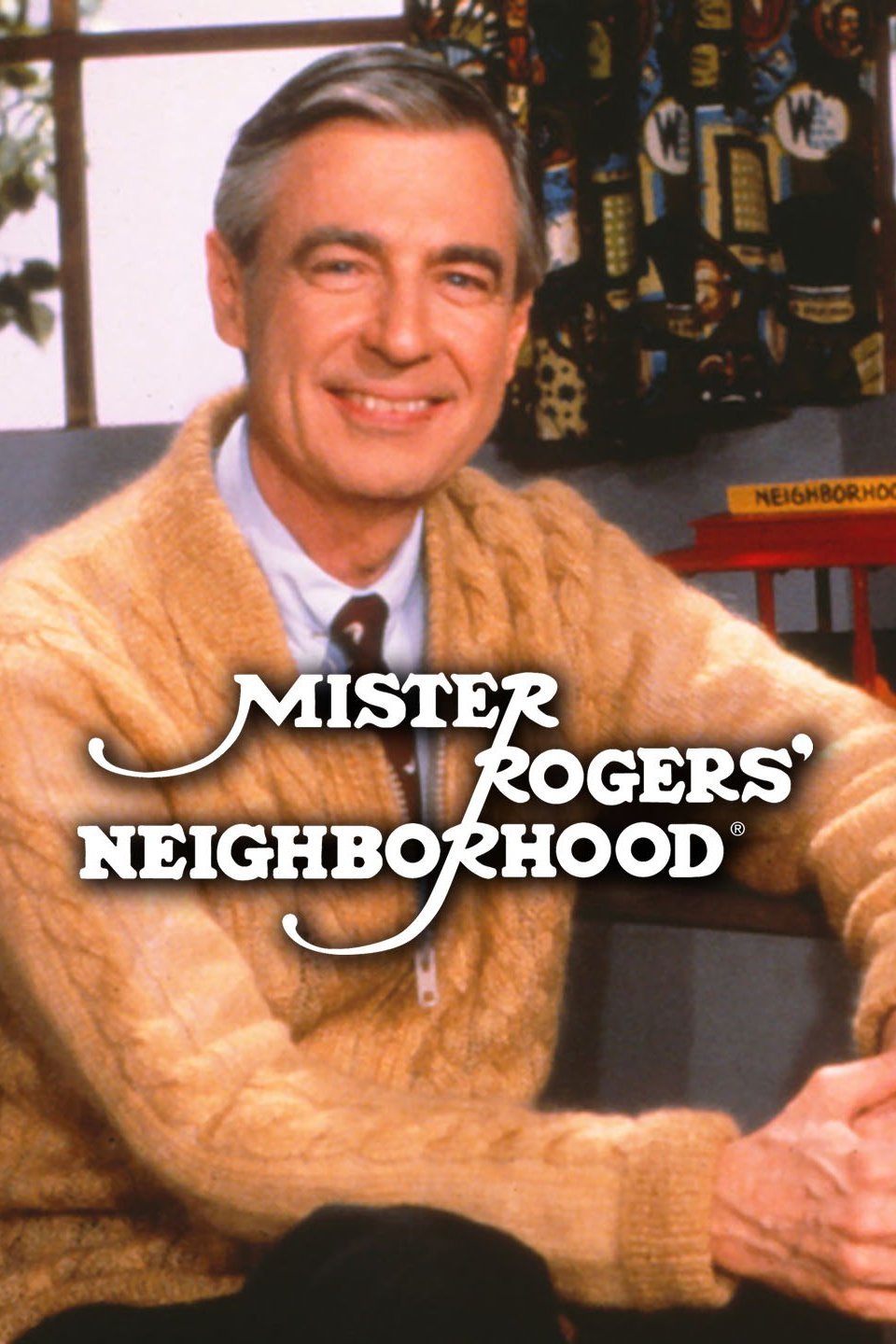
Image result for mr rogers neighborhoodI recently saw Won't You Be My Neighbor?, the documentary of Fred Rogers' life working in children's television. This documentary had so much to say about healthy child development and education, but I left the movie theater with a profound appreciation of the importance of language. Fred Rogers understood that words matters. He intentionally chose every word said by the puppets (most of whom he voiced) and every song that was sung on the show. This demonstrated his understanding of the power of the word.
Words can impact culture in significant and positive ways. Unfortunately, words can also negatively impact culture; television shows, music lyrics, politicians, and celebrities provide us with daily examples of this fact. I cannot imagine what Fred Rogers would say about children's television and media today ... talk about "turning over in his grave."


Image result for starbucks logo


Language Matters
The corporate world also understands that language matters. Companies that want to create culture begin with language. Three of the best examples of this are Starbucks, Chick-Fil-A, and In-N-Out Burger. Starbucks refers to their employees as "partners" and have redefined sizes for the world: a small is now called "tall," a medium is "grande," and if you want a large, it is a "venti." Chick-Fil-A answers every "thank you" with a "my pleasure." And, of course, the entire country knows what a Double-Double is, even though In-N-Out Burger is limited to the Southwest.
Image result for in-n-out
Did you know In-N-Out
 even has a "secret menu"?

Each of these companies intentionally created their own language to build a distinct and positive culture. Customers who can speak the "language" of the culture feel part of the community, part of the inner circle. They feel accepted.


Language in a School Culture
Of course, educators can learn much about using language to strengthen culture from both Mr. Rogers and the corporate world.

Here are a few steps for educational leaders to consider

1. Recognize that words matter. A phrase like "sticks and stones can break my bones, but words can never hurt me" tend to downplay the importance of words, but words (and its positive or negative impact on school culture) can significantly impact teacher and student performance. Start at this point ... words can be used powerfully.

2. Take the temperature of your school culture. One needs to measure the temperature of the room before he/she knows whether to turn on the air conditioning or the heat. These temperature measurements can be informal ("I am sweating ... do you feel warm?") or formal (check the thermometer). Likewise, school culture can be measured informally or formally.
  • Informal Measurement -- Talk regularly with your staff, student leaders, and parents about topics of concern. Assemble a focus group of appropriate stakeholders to get feedback/insight.
  • Formal Measurement -- Find or create a survey to measure your school culture; begin collecting this data annually.
    • US Department of Education has created ED School Climate Surveys that can be administered for free. Check out the resources HERE, including the pdf of the survey.
    • AdvancEd MS/HS Student Survey ... see sample HERE.
    • MGSSE and HSSSE -- the Center for Evaluation and Education Policy (CEEP) at Indiana University has developed two instruments to measure student engagement and school environment. These instruments are not free, but will provide the school with helpful data to evaluate school culture. More information can be found HERE. 
3. Reflect on the results. With your ed leadership team and valued stakeholders, discuss the results of the measurement. Celebrate 2-3 areas of commendation and identify 2-3 areas needing improvement.
  • Think about language ... does your school community struggle with disrespect, gossip, complaining? Do staff/students in your school tear down rather than build up?
4. Be intentional (as Mr. Rogers). Take careful steps to select words that will become part of your school culture. Create a distinct language for your school and over-communicate those words.
    Image result for how full is your bucket
  • Many schools will choose words from a mission/vision statement -- my school's words come directly from our mission statement: Inspire, Equip, Engage. However, if you are addressing a specific culture issue, general words like these may not suffice.
  • Schools trying to change a culture may have to adopt a new procedure or program. Schools struggling with negative words may want to adopt the How Full is Your Bucket? program.

5. Continue to tend your school culture. Language can have a powerful, positive impact on school culture; it can also be a culture killer. Keep a close eye on language. Unfortunately, we live in society rife with crude, vulgar, degrading, mocking language. This language enters our hallways and classrooms and will negatively impact the school culture. Don't give in ... keep monitoring language. Language monitoring is culture tending. Like tending a garden, tending your school culture requires hard work every single day. 
  • Challenge your student leaders to help monitor the language. You know you are winning when students say to each other ... "Hey, we don't use that language here!"

I know we don't live in Mr. Rogers' neighborhood, but words matter wherever you live. Language impacts culture, and culture impacts everything else.

Continue to lead and learn!

Sunday, February 18, 2018

Doing Classroom Dishes

Image result for doing dishes
Every few months something gets stuck in our dishwasher drain pump ... I am never sure how the item gets through the filters, but it usually ends up costing us $100 to have it repaired. While waiting for the repair, my family washes dishes ... the old fashion way.

Standing with my hands in hot, soapy water for 30 minutes provides me with the time to reflect. To be honest, this inconvenience has slowed down my life, caused me to drop my device, and has provided me time to reflect ... all good things.  
It has also caused me to think about efficiency machines, like dishwashers, that are ubiquitous elements of life. Tools, like dishwashers, make life more efficient, but do they wash dishes better?  Likewise, is an efficient life a better life?


Because I am an educator at heart, my dishes reflection time has been spent considering the impact of "doing dishes" in the classroom. Does more classroom efficiency mean more effective teaching and learning?

Ever since the Industrial Revolution, efficiency and cost effectiveness has been valued and embraced in our culture. The world of education has also focused on efficiency. In the early 19th century, the "monitorial" model of education surfaced. In short, it was a concept that reduced the number of adult teachers needed in a school by having a "monitor" teacher (adult certified teacher) oversee a group of student teachers who, in turn, taught the classes.

It was efficient and cost-effective because the school system only had to pay one adult teacher, but was it beneficial to education? Clearly, this model is not in the best interest of student learning (notwithstanding, many universities still use this model by having TAs/GAs teach the undergraduate classes).

The monitorial education model wasn't effective, but the Industrial Revolution's influence is still seen in classrooms today. We strive for efficiency in the classroom ... even though it has little correlation to effective learning.

Doing Classroom Dishes -- Effectiveness over Efficiency

Build Relationships
Image result for students don't care how much you know until they know how much you careBuilding relationships with students takes time. Often it takes weeks at the beginning of the year to learn names and connect relationally with students ... not very efficient but truly effective in making a difference in student lives. The time spent building relationships with students is vital to teaching and learning; however, it also teaches the important life-lesson that tending relationships takes time.

Inefficient (but effective) Communication
It is more efficient to send an email to the entire class describing a lesson than it would be to sit with each student and carefully describe and guide the lesson. But, what is more effective for student learning? Take the time to communicate face-to-face and individually as much as possible; intentional times of teacher circulation during the class to check-in on progress and clarify expectations is essential.

Both of these concepts are also important life skills that students need to learn: tending relationships takes time and communicating face-to-face is more effective. It is vital for students to see their teachers modeling these life skills; life skills that students need. Exhibit A-Z: students trying to resolve a conflict over social media. You cannot effectively tend a relationship or clearly communicate in 280 characters.

Image result for welcome back kotter
Increase Wait Time / Resist Calling on Blurters
One classroom practice that is soooo enticing for teachers is to focus on students who know the answer and are eager to respond. Blurters are so good for efficiency; they provide the right answer at the right time so that a teacher can move on to the next point in the lesson. Efficient but not effective ... at least, if one is concerned about everyone in the classroom learning. Letting blurters drive the pace of a lesson often leaves the majority of the class behind. Here is an article on the benefits of increased wait time to improve learning.

Here are a few other areas that educators should consider in order to celebrate effectiveness over efficiency.
  • De-Emphasize Timed Tests -- ugh, those dreaded "math in a minute" tests that has turned a generation of potentially strong conceptual math thinkers into math haters.
  • Book Research over Digital Research -- resist the quick Google search for answers on digital devices, rather encourage students to critically read information in context to gain understanding in addition to the "correct" answer.
  • Annotated Bibliographies -- the power of this exercise to teach reading, summarizing, and truly understanding is limitless.
  • Hand Writing Letters to Friends -- what!? communicate in more than 280 characters?
  • Writing Out All Math Steps -- calculators are more efficient, but true understanding is achieved through going through all the steps.
  • Include R&D Before the Project -- encouraging students to think through research and design and even make a project proposal before jumping into a group project prepares students to be a valuable part of an effective team in the workplace.
  • Reading Out-loud -- it is much more efficient for a student to read on his/her own, but seeing AND hearing a written text facilitates comprehension and memory.
Of course, we want to utilize technology and efficiencies in the classroom so that every student can learn and be more productive, but make sure that it is also effective.
  • What are you doing in your classroom because it is efficient?  
  • Is it also effective?
Btw, it's been over a month since our dishwasher has been broken ... no calls yet to get it repaired.

Friday, December 29, 2017

Be Traditionally Progressive!

We often try to simplify things through polarization. You are either democrat or republican, conservative or liberal, a fitness freak or a couch potato, a digital native or a digital immigrant ... for someone who finds myself in the middle of each of those categories above, this is frustrating. Trying to take what is grey and make it black or white complicates rather than simplifies.

In education, traditional education and progressive education are usually seen as polar opposites that cannot be mixed.

Can you be traditionally progressive or progressively traditional? or are they mutually exclusive?

When this dichotomistic image appeared in my Twittersphere, it got me thinking.

Image result for progressive vs traditional education
As with most issues, definitions make a huge difference ... what is meant by traditional and progressive education?

Traditional Education
Traditional education can be summarized by a belief that returning to the education (pedagogy and content) of the past is the best for education. Traditional education presupposes that there are enduring aspects of education that should be taught to all students at all times ... and in the same way that it has always been taught. It tends to be against change in schools, frowning on educational fads. Classical education models and Back to the Basics movements would align with traditional education. 

Educators with a traditional educational perspective tend to teach the content that they were taught as students in the same way that they were taught as students. Content and pedagogy in traditional classrooms do not change from the educational models of the past.

Even though I would not categorize myself as a "traditional educator," I do believe that we can learn much from the past and many things should stay the same in education.

Historically, schools operate under mission statements that have not changed for years. For example, I currently work at a school that has been thriving in the Denver metro area for over 100 years. For a century, the mission of the school has not changed. The words of the mission statement continue to guide the school in the 21st century. If written well, a school's mission statement should focus on the timeless elements of educational purpose ... isn't that a traditional element of education?

Similarly, the school or classroom's core competencies or essential student learning objectives, if written well, may not change for many years. For example, many schools (even progressive schools) have "Effective Communication" as one of their student core competencies, and this educational pillar has been in place since Aristotle's trivium (rhetoric).

Christian schools, obviously, embrace biblical values on life and learning that have been passed down from generation to generation for over 2000 years. A few of these unchanging elements found in the Bible include, the fruit of the spirit (Gal. 5:22-23), loving God and loving others (Mt. 22:36-40), and the command to welcome the stranger and alien (Lev. 19:34 et al.). These, at least for Christian schools, are traditional elements of education.

So, if your school has a mission statement, core competencies, and biblical values on life and learning that have not changed since the school's inception, does that mean that the school provides a traditional education? 

That is what some dichotomistic educational philosophers want you to think. You have to be either traditional or progressive.

Progressive Education
The concept of progressive education (attributed most closely to John Dewey in the late 19th and early 20th century) is a view that the best education (content and pedagogy) is one that continually changes to adapt to a new group of students and cultural context. Dewey (and other educational psychologists after him) explored elements of pedagogy from a scientific model to see which is most effective in teaching and learning. He was a pragmatist and promoted changing ineffective teaching practices and embracing effective ones. Although Progressive Education has been criticized because it seems to chase after each educational fad, John Dewey was actually focused on a methodical scientific study of pedagogy, utilizing trial and error to confirm or reject specific educational practices.

I appreciate educators (and schools) who are progressive, defined as ever-improving, ever-evaluating current practices to see which pedagogical techniques are most effective. However, others define "progressive" education differently.

Similar to the chart above, the National Association of Independent Schools published a list of elements that are found in progressive classrooms and schools. (https://www.nais.org/magazine/independent-school/spring-2008/progressive-education/)

  • Attending to the Whole Child
  • Community
  • Collaboration
  • Social Justice
  • Intrinsic Motivation
  • Deep Understanding
  • Active Learning
  • Taking Kids Seriously
The article linked above describes what is meant by each of these categories. My concern is with the implication that these elements are exclusive to progressive education. Can't students in a traditional classroom be intrinsically motivated or concerned about social justice?  Can you embrace any of these elements within a traditional educational model?

Both And

Educators today should embrace both the traditional aspects of content and effective pedagogy of the past and the modern content and new pedagogical tools needed to prepare today's students to learn and lead in the 21st century.

Educational leaders can help achieve a traditionally progressive school through the following practices ...
  • Re-emphasize the mission statement, core competencies, and educational philosophy in which the school was founded. New teacher orientation should include an extensive program on the philosophy and tradition of the school. In addition, school halls and classroom walls should nod to the traditions of the school ... the enduring elements that are valued by the school. Be Traditional!
  • Encourage innovative education by the teachers. Every school should have "innovation grants" in which teachers can apply for funds to try something new in the classroom. Professional development should have opportunities to learn new educational techniques, and administrators must encourage teachers to try new pedagogical methods to uncover more effective educational practices. Be Progressive!
I am thrilled that my rather "traditional" Christian school has innovative teachers who are doing some very progressive things. Here are a few things that I see every day walking through classrooms:
  • 20 Time / Genius Hour
  • Flipped classrooms
  • PBL through Google classroom
  • Digital bell-ringers, formative assessment, and exit tickets using student phones/devices
  • TED Talk student presentations
  • Action research to collect original data
  • Classrooms with flexible seating options
  • Breakout spaces (with white board painted walls) for student collaboration
So am I a traditional or progressive educator?  As expressed above, I do not believe that they are mutually exclusive. Of course, the easy answer is I am both.*  

It would be good for traditional educators to think more progressively and for progressive educators to think more traditionally.

So go and be traditionally progressive next year! 


*If I am pushed to take a stand ...


I am more concerned with those teachers and schools who hold to educational methods of the past in our modern society. Technology has rapidly changed our world and has even changed how our brains function. Instead of lamenting the current state of education and pining for more "traditional" students and schools, we need to embrace the fact that students in front of teachers today learn differently than they ever have. Therefore, it is more imperative for educators to pursue innovative and effective methods of instruction and assessment rather than hold to the pedagogy of the past.

Fuel for another blog post :) 

Tuesday, October 31, 2017

The Reformation's Impact on Education

Image result for 95 theses luther church door reformation
On October 31, 2017, many Christians celebrated the 500th Anniversary of the beginning of the Protestant Reformation. When Martin Luther nailed his 95 theses on the church door, he began a religious reformation AND a cultural reformation that included the educational system.

As a Reformed Christian, I deeply appreciate the impact of the Reformation on faith; as a professional educator, I see the impact of the Reformation on education every single day.

Many of you are asking, how does a religious movement have anything to do with the classroom? More could be written on each of these topics, but let me share briefly a few of my thoughts (remember I'm an educator not a theologian).

95 Theses on a Church Door

It all began with nailing 95 theses on the church door in Wittenberg, Germany. It was the tradition in that day to post issues to debate on the church door; however, few dared to challenge the beliefs (or activities) of the church in these debates. Martin Luther did not want to destroy or split the church with this debate; his goal was to engage in a healthy debate with the leaders of the church on a number of issues, especially the selling of indulgences. He did not, initially at first, want to leave the church but rather to call it back to the Bible. While Martin Luther was initially excommunicated rather than debated, the topic was eventually debated by the entire western world.

So, what does this have to do with education today?

Debating for Learning

One of the best student learning experiences is found in debate ... it is even better when the debate is about a current topic. Debating prepares students to be critical thinkers and effective communicators. Debates can be formal or informal, heavily directed by the teacher or a spur of the moment discussion among students at lunch. Whatever the format, debating is an important part of a rigorous and lively academic culture.

What if every school had a "church door" that students could post objections, questions, and issues to debate?

School Leaders ... Before installing that door and creating a healthy debate culture at your school, remember that Martin Luther challenged the highest authority of his day ... and you can't excommunicate the students for posting an issue. Just kidding ... but you better be ready to debate the best and brightest students in your school.

What would a "church door" debate culture look like in your school?

Priesthood of All Believers

One of the tenets of the Reformation was the "priesthood of all believers." Through Jesus Christ's work on the cross, all who believe in him have "priestly" access to God through prayer and reading God's word. In addition to "priestly" access to God, there is also a "priestly" responsibility to intercede for others who are hurting in this world.

Okay, so how does that relate to education?

Universal Education and Restoration

There are two logical educational conclusions to the Reformation concept of the Priesthood of All Believers: universal education with a focus on restoration.

Coming out of the Medieval Ages, schools before the Reformation were primarily for boys from wealthy families or those studying for the priesthood. Schools were taught in Latin as that was the language of the powerful in that culture.

Martin Luther (and many of the other Reformers) fought to institute universal education for all children, boys and girls from all socio-economic levels. Not only universal education but education  in the vernacular of that culture. If all believers are "priests" then all children should be educated so that they can perform "priestly" duties ... to be able to read the Bible (in the common language), to be able to understand God's word intellectually, and to intercede for others through prayer and acts of service.

While Luther believed strongly in education, he was not an academic elitist. He celebrated both academics and trades as equally honored, God-ordained vocations.

Schools that honor this Reformation principle are ones that welcome all students, focus on developing the whole child, and teach students to use their talents as a living sacrifice for God's glory and service to humanity.

How does your school reflect the "priesthood of all believers"?

Ad Fontes

Another powerful slogan of the reformation was the Latin phrase, ad fontes. This phrase is literally translated as "to the fount" or "to the source" and was interpreted by the Reformers to challenge all Christians to return to the Word of God (the source) to evaluate church practices and the culture of the day. Martin Luther sought to debate the church's practice of selling indulgences because when he went back to the source (ad fontes), he didn't find anything in the Bible to support this church practice.

This is a great reminder for all Christians ... to evaluate church practices and culture in light of God's word, but what does this have to do with education?

Primary Sources

The ad fontes concept is such an important one in education, especially in today's world rife with fake news. In our culture, we have become sloppy researchers and subsequently sloppy thinkers; after all, it is so much easier to do wiki-research rather than digging into primary sources. Students need to be challenged to do "ad fontes" research ... with primary sources, eye witness accounts, quotes in context, etc. Students (and adults alike) quickly "google" to find information and assume that all of the search results are equally true and equally valid.

One of the most important 21st Century skills is evaluating information. Students today must understand the importance of using primary sources and how to evaluate the plethora of information that is at their fingertips.

Students are not the only guilty ones ... adults (of all ages) believe anything posted on social media. Shout-out to my Facebook friends ... look up articles on Snopes.com before sharing with me!  If I comment "ad fontes" on your post, you'll now know what I mean.

Seriously ... students must be taught how to evaluate sources and use primary sources.  Ad Fontes indeed!


When historians list events that changed the world, the Reformation is usually listed in the top 10. While the theological points of the Reformation were essential to a change in the church, the Reformation's impact changed the world ... including the world of education.

Happy 500th Birthday!