Search This Blog

Sunday, March 6, 2016

What's the Point?

My school is celebrating her 100th birthday, and I have been asked to write a "purpose of education" article for the celebration in April. As a process thinker/writer, I thought I'd blog as I brainstorm ideas for this article.

One of the most common questions that we get from students is “what’s the point?” It is usually followed by its ugly sister, “why do we have to study this?” While these questions may be annoying at times, they demonstrate that our students are really insightful, are thinking teleologically, and understand the importance of purpose and meaning in life. Unfortunately, we often do not respond with an answer that truly values these questions.

Teleology -- 
(from Greek telos, meaning end or purpose) 
is the philosophical study of nature by attempting 
to describe things in terms of their 
apparent purpose, directive principle, or goal.


So, what's the point? Let me begin with what is NOT the purpose of education.
  1. The purpose of education is NOT to “get smart.” We are not just training students to have head knowledge so that they can do well on Jeopardy or dominate friends in Trivia Crack. Students in the 21st Century have every fact on their phone, ready to be “googled” at a moment’s notice. Although students in school will still memorize facts, acquiring knowledge and getting smart is not a purpose in education.  
  2. The purpose of education is NOT to get wealthy. Often when asked about a school, parents respond: Johnny is getting a good education so that he can get into a good college. When pressed further with “what’s the point of getting into a good college?”, they respond with ... to get a good job (“good” being defined “as one with a high salary”). Thus, begins the cycle of education today … students go to a good school to get into a good college to get a good job to make a lot of money so that their children can go to a good school, continuing ad nauseum. Unfortunately, this common perspective of education doesn’t answer the teleological question for education (unless your ultimate goal is “to make a lot of money”).
  3. The purpose of education is also NOT “to live a comfortable life.” I call this the John Wayne principle of education, based on his quote: “Life is tough, but it is a whole lot tougher if you are stupid.” Many in our society believe that education has been established to help us live in comfort and ease. Although education does provide intellectual resources to problem solve, living an easy life is not the purpose of education.
  4. Finally, the purpose of education is NOT to prepare students for a job. This may be the most difficult one to counter as “job preparation” seems to be the main reason for education today, especially at the college level, i.e., your major better prepare you for a job after graduation. We do prepare students for future employment, but we want to prepare them also for life more broadly.
So, what is the point of education? Let me begin with the premise that flows from the last point above, schools should educate for life. Our purpose in education should reflect our purpose in life; the answer to “what’s the point?” should be the same for education and life. Let me give you a quick example from a bumper sticker. 
Image result for he who dies with the most toys wins
If your purpose in life aligns with the bumper sticker above, then your education should prepare you to make money and acquire material things. My point being that we should educate for life, and an educational purpose statement should align with a life purpose statement.

Schools need to think broader and more teleologically with mission statements. To quickly summarize, let me counter the reasons above.

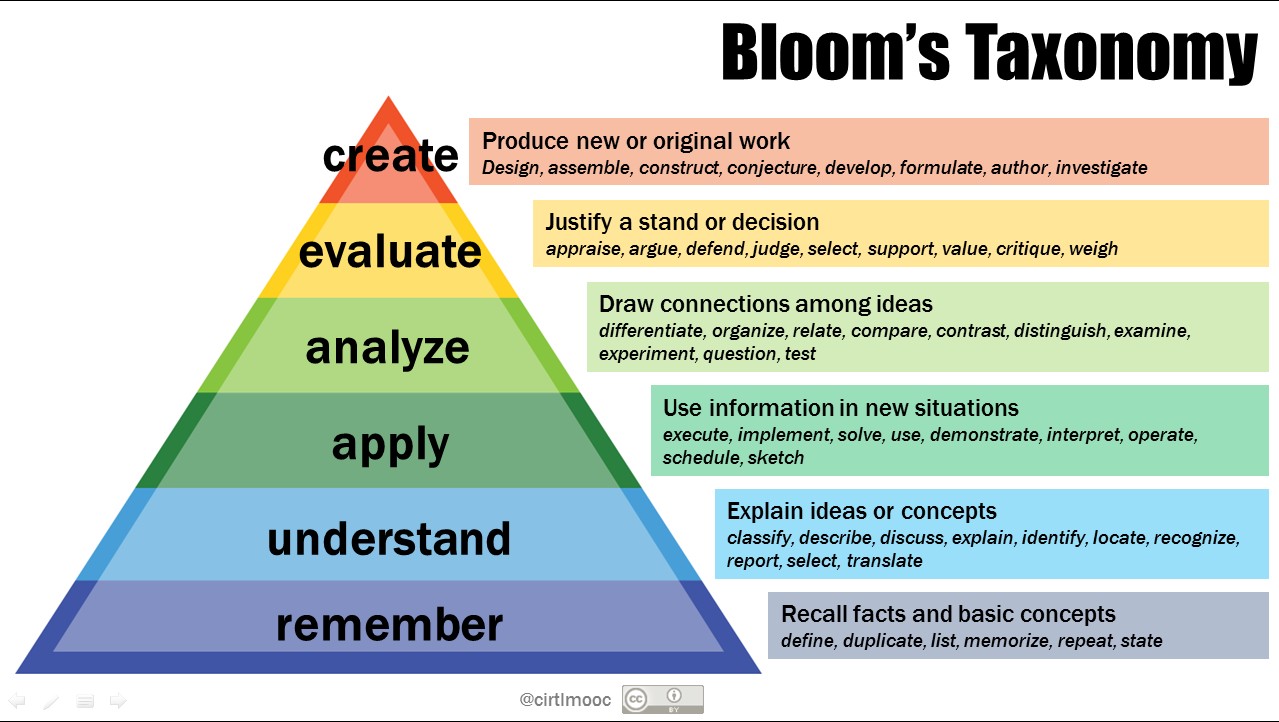
1. Education is not to “get smart.” Instead of knowledge acquisition and memorizing facts, education should focus on using the knowledge that is readily available to students. Education in the 21st Century must focus on the higher levels of Bloom’s taxonomy and de-emphasize learning facts, as the first level (at least) is provided through technology. Analyzing if that information is accurate, valid, and reliable and then using that information is more important in our technology age.
2. Education is not to get wealthy. While being compensated well with a high salary may be a by-product, it should not be our purpose or end goal in life. I like to point out the difference between affluence and influence. Affluence being “the state of having a great deal of money”; influence being “the capacity to have an effect on the character, development, or behavior of someone or something.” A teleological focus ought to be larger than just making money; it should consider using your position to make changes in your sphere of influence. The goal of education and life is to make a difference, change attitudes, behaviors … essentially leave the world better than what you found it.

3. Education is not to be comfortable in life. Closely connected to the second reason, our goal in life or in education should not to be comfortable. Often the important changes (in both our character and our culture) come through adversity and trials. Consider the Civil Rights movement; what a different world we would currently be living in if Rosa Parks and Martin Luther King Jr (and many others) decided to avoid conflict. How stagnant our world would become if we all took the easy road and avoided difficulty.

4. Education is not to get a job. This is misguided as a purpose of education for a couple of reason: first, according to the Bureau of Labor Statistics, people will hold an average of 11 different jobs during their lifetime (others have cited the number as 7 different careers). By preparing for a specific job, the purpose of education will only last a few years. Second, industries (especially those driven by technology) change so frequently, that specific job preparation in college is often obsolete shortly after a student graduates from college. Third, education solely for job preparation is rather short-sided. Even, if an individual remains in a job for his/her entire career, hours spent working are only 15% of life. There is so much more to life than work, and education should prepare students for all of his/her callings.


So what is the point of education? The answer should begin with focusing on what is the point of life?


Most of us do not think teleologically by nature; instead, we are trying to get through the day. But, this is an important practice to model for students and to teach intentionally to students. An easy way to do this is to look at the school’s mission/purpose statement and discuss with students how specific assignments help you fulfill the mission statement. Unfortunately, you will find many school mission statements that are not teleological and focus on the objections that I listed above. 

Here are a few other resources to help students think about purpose statements.

Image result for eagle scoutEagle Scouts -- one of the requirements of an Eagle Scout is to write a “statement of ambitions and life purpose.” Find exemplars of those statements and encourage students to write their own.


This I Believe -- listen to some examples from NPR’s series, “This I believe” and read examples from the “This I Believe” website or book that grew out of the series. There are great resources for educators on these websites. Produce a “This I Believe” podcast with your students.


Consider Communities of Faith -- While difficult for a public school to embrace a religious purpose statement, encourage students to talk with their parents and family about their specific faith background, as often religion helps us to think about purpose in life … and what a great discussion that this will lead to at home. As a Christian, one thing that helps me think about the purpose in life (and the purpose of education) is reading the Bible. For example, the Bible has a number of life purpose statements, like Micah 6:8 …

 Image result for cross bible
"What does the Lord require of you?
To act justly and to love mercy 
and to walk humbly with your God."
That is a powerful purpose statement for life. Wouldn't it be amazing if our education helped students to act justly, love mercy, and walk humbly?

My purpose in this blog post is to encourage us, as educators, to do a better job answering the annoying but important questions from students of "what's the point?" and "why do we have to study this?" ... and no, "because I said so" is not a good enough answer.

Each school and educational leader should have their own educational purpose statement that drives everything that they do.

If nothing else, find your school's mission statement, reflect on what it says about the purpose of education and life, and design assignments to help fulfill your mission statement. Hopefully, you can encourage your students (and your colleagues) to think from a teleological perspective.

Sunday, February 21, 2016

Chaperoning Dances and Leadership


A part of being a high school principal is chaperoning dances. If you have awesome students like I do, this task ends up providing four hours of reflection. Our recent Sadie's dance reminded me of my favorite leadership metaphor.

Leadership gurus Ronald Heifetz and Marty Linsky, in their book Leadership on the Line, challenge leaders to be both on the dance floor and on the balcony. To summarize, being "on the dance floor" means being involved in the day to day operations, while being "on the balcony" refers to stepping back from the details to oversee the organization from a more global perspective. Often leaders are more comfortable either on the dance floor or on the balcony; however, what makes this metaphor so powerful is the fact that leaders need to do both. Top leaders are daily going up and down the metaphorical stairs from the balcony to the dance floor.

In education, the dance floor / balcony metaphor is especially pertinent. It is essential for school leaders to be active and visible in the classrooms and at concerts ... and yes, even being a chaperone at a dance. But, it is equally important for school leaders to spend time in the office and at meetings, working to make sure policies, procedures, calendars, and communication are in place so that the school can thrive.  

Get on the Dance Floor

I am an introvert, so I have to tell myself to "get on the dance floor" multiple times a day. It is so easy for me to sit in my office working on the next meeting agenda, policy change, accreditation document, or school improvement plan. However, when I am greeting students as they arrive, walking through classrooms, chatting with students and teachers in the hallways between classes, and attending school events at night, my leadership is enhanced. As I spend time on the "dance floor," I am re-energized by my time observing the great things happening in the classrooms and visiting with amazing students; it has become a revitalizing break from my "balcony" work. One of the responsibilities of the administrators at my school is to manage the car line at the end of the day. While I don't relish donning my fluorescent yellow vest and directing traffic, this task really helps my visibility with parents and students and gives me a front row seat to the daily operations of pick-up. Here are a few "principal" tasks that force me onto the dance floor ...

  • Welcoming students as they arrive
  • Observing classroom / learning environments
  • Delivering notes/lunches to students for the office staff
  • Scheduling classes with students
  • Having lunch with students after their 4th tardy
  • Supervising athletic contests at night
  • Co-teaching a class
  • Making opening comments at a music concert
  • Helping with carline and parking lot duty

Get on the Balcony

As I mentioned in the dance floor paragraph, I am an introvert, so the balcony is a comfortable place for me to be. However, some administrators enjoy "dancing" and need to be reminded to step back and take care of the "balcony" duties. One of the most important roles of a principal is to handle the behind the scenes details so that teachers can teach and the school can run smoothly. This involves implementing effective policies/practices, handling discipline, communicating with parents, and promoting the school. "Balcony" work also requires thinking strategically and from a teleological perspective. One of my jobs is to chair the school improvement team; this position involves setting goals for the school, conducting program evaluations, and taking a pulse of the school through parent and student surveys. Setting initiatives that promote innovation and improvement are an important part of being an effective school leader; encouraging professional development and setting aside resources to achieve those initiatives is equally important.  Here are a few principal tasks that require that I stay on the balcony ...
  • Setting the school calendar/schedule
  • Developing the parent/student handbook
  • Creating an effective professional development program
  • Managing the educational budget
  • Conducting teacher/staff evaluations
  • Overseeing student assessment
  • Managing accreditation
  • Serving on admin and school committees
  • Communicating with parents and the greater community

I am preaching to myself with this blog post. I am not a great dancer (figuratively and literally) and need to have "Get on the Dance Floor!" in big, bold words on my desk to remind me of this metaphor. 

It is encouraging to see other educational leaders living this metaphor well. A friend of mine, who is also a principal, arrives early and stays late to work in his office on "balcony work" so that he can spend the hours of the school day outside of his office on the "dance floor."  He understands this metaphor and has found a way to do both every single day.

Enjoy the dance!

Sunday, February 14, 2016

Every Student Every Day

Every Student Every Day (or beware of the blurters)

One of the education mantras that I use with my teachers is "Every Student Every Day." This phrase was one that I initially had to tell myself as a teacher, but its power has been reinforced now that I am a principal observing classrooms.
When I taught high school, blurters dominated my classroom, and I was okay with that because the blurters were my best students. Blurters were the students eager to answer ... like Horshack with Mr. Kotter. I would ask a question or begin a discussion and two or three students would be eager to answer; I would call on them or let them shout out the answer. This worked well. I often ended class feeling really good about the lesson because students were engaged, they understood what I intended them to learn, and they were dutifully paying attention (or at least a few of them ... the blurters).
I realized that this was a problem when I forgot to take attendance until after class. Once the students left the classroom, I literally couldn't remember who (other than the blurters) were in my class a few minutes earlier ... so I guessed on the attendance, and I guessed wrong. 
Worse than incorrect attendance, I realized that I had no clue if the majority of students were intellectually present. Thus, my solution became "Every Student Every Day" (ESED). I have to admit that classes did not go as smoothly ... discussions became halting and difficult, and I couldn't count on the right answer when I called on a non-blurter. But, I knew that I was reaching and teaching a higher percentage of students.
So how can teachers reach ESED? ... of course, asking every student a question during the class period is one way, but there are so many more creative ways to reach ESED: entry (anticipatory set) questions, exit tickets, check-ins, pair-share, reading around the room, quick quizzes, and discussion circles are a few suggestions.

The Benefits of ESED
Formative Assessment -- One thing that I noticed after I began practicing ESED was how many of my students were not learning and needed reteaching. This is the essence and the importance of formative assessment, knowing if students are learning. While formative assessment is a huge topic worthy of a future blog post, an ESED policy is an essential key to formative assessment.
Building Relationships -- Teachers are mentors and role models for students. While some of this is inherent in the position, teachers who really want to impact the lives of their students need to connect with them daily. Unfortunately, we hear too often of students "falling through the cracks" or spending the day unnoticed. How amazing it would be if every student was guaranteed multiple conversations with adult role models every single day.

Improved Classroom Environment -- One of the classroom observation tools that I utilize is the ELEOT (effective learning environments observation tool), developed by AdvancEd. It is amazing how the practice of ESED improves the overall classroom environment. The classroom learning environment is equitable, supportive, and active; teachers are able to monitor learning and provide feedback to help all students succeed. The ELEOT almost fills itself out when a teacher embraces an ESED perspective.

It may seem like a very simple suggestion, but ESED transforms a classroom environment, improves teacher/student relationships, and improves learning.  If you are a teacher, give it a shot!

If you are an administrator, try to connect with every teacher every day (something that I need to work on).

Sunday, January 31, 2016

Restoration Projects

One of my favorite education quotes comes from Nicholas Wolterstorff (@DrWolterstorff), educational philosopher formerly at Calvin College and Yale University ...


"It is nothing but a pious wish and a grossly unwarranted hope that students 
trained to be passive and non-creative in school will suddenly, upon graduation, 
actively contribute to the formation of ... culture."

There is so much to ponder in this quote, but it is a favorite of mine because it challenges us, as educators, to be intentional about what happens in school. Rather than just assuming that students will become graduates who live out the school's mission statement, every program must have student learning objectives aligned with the school's mission statement (in the Wolterstorff's example ... to create culture). 

Every school has (or should have) a mission statement that guides every curricular and co-curricular program. For those of us with school mission statements with lofty "change the world" language, how we encourage students in this should be of primary consideration.

We often think that students will fulfill the school's mission after they graduate; however, we rarely give them opportunities to practice living the mission (i.e."changing the world") or even provide instruction in how to actually do this.

One pedagogical strategy that helps students learn how to "change the world" is service-learning. Different than required service hours, service clubs, or school community service projects (which are all great and can help fulfill the school's mission statement), service-learning is pedagogy and, thus, connected to classroom teaching and learning.

S-L Defined
"Service-Learning is a teaching and learning strategy that integrates meaningful community service with instruction and reflection to enrich the learning experience, teach civic responsibility, and strengthen communities." (Faculty Toolkit for Service-Learning in Higher Education, 2007)

While it is relatively easy to establish a service club, set aside a day for the students to do community service, or have a food drive at Thanksgiving, connecting service to classroom learning is more difficult.

Restoration Projects
One way to help service become an integral part of classroom learning is to have "restoration projects" in each unit. These assignments consider how to use classroom learning to address a real need in the community and then take action to serve. Each academic discipline has its own set of service-learning examples, and I encourage you to search for examples in your subject area/grade level.

I taught high school English and tried to connect service and learning through restoration projects; here are a few examples.

Creative Writing -- Children's Story Unit
After studying children's stories, writing (and illustrating) our own, students read their stories to an elementary classroom. This developed into regular reading times with the elementary students throughout the semester.

American Literature -- Puritan Writing
After reading Anne Bradstreet's Upon the Burning of Our House and researching modern stories of loss, the students (working with the American Red Cross) collected money for a local family who lost their home in a fire.

British Literature -- Lord of the Flies
While reading the novel by William Golding, we discussed what is needed to survive on an island, in the local wilderness, and in our society. The discussion led to the students creating and delivering "survival packs" for the homeless in our community, which included water, blankets, socks, and food.

Although I wasn't able to have a restoration project for each unit, these projects became a powerful lesson on how we can use what we learn to make a difference in the world. Obviously, each project should be age appropriate, connected to classroom learning, and tied to the local community, so each project will be unique to the school, classroom, community.

Thankfully, we don't have to re-invent the wheel ... there are so many great resources on service-learning.  Here are a few to check out.

Faculty Toolkit for Service-Learning

Youth.Gov on Service-Learning

Character.org on Service-Learning

Service-Learning Projects for the Environment

Service Learning Primer

Sunday, January 17, 2016

Stressed Out! Homework (Part 2: Quality)


In my last post, Homework (Part 1: Quantity), I discussed how homework can stress out students and families and suggested a standard to limit the quantity of homework given to students each night. (1 min of homework per grade for each subject). For example ...

6th grade -- 6 min of hmwk per subject (6 subjects) = 36 min of hmwk per night
10th grade -- 10 min of hmwk per subject (6 subjects) = 60 min of hmwk per night

The Homework Debate -- What Kind?

Excessive homework causes stress; pointless homework also causes stress. However, limited and purposeful homework can motivate students and encourage learning. Here are three categories of homework that have the potential to promote learning.

Practice -- We all know the adage that "practice makes perfect" and that practice leads to mastery. So, in order for our students to gain mastery, they need time to practice. Additionally, what a powerful life lesson ... it takes work (often after hours) to succeed in life. Interestingly, another statistic being used is from Gladwell's research stating it takes 10,000 hours to become an expert at something (Outliers, 2008). Please do not misunderstand my reference ... I am NOT saying to give 10,000 hours of homework! But the lesson is clear, extra practice is needed for mastery. In school, a limited amount of homework can help develop those habits of success.

Motivation -- Homework should also be used to motivate students for learning and pique their interest so that they are excited about what they will be learning the next day in school. Unfortunately, educators don't utilize anticipatory sets or lesson hooks in homework as much as they could. We need to remember how powerful cognitive dissonance is in motivation and learning theory. A challenge question, video clip, or a thought-provoking quote are excellent ways to motivate students to learn. How great would it be if student come to class eager to discuss, find out the answer, or express their opinions about their homework rather than just turn it in for a grade.

Differentiation -- Homework can also be used to differentiate and re-teach concepts to solidify understanding. Teachers do not have the time to differentiate enough to teach every student in his/her learning style, so they should use homework to differentiate (please don't use homework to do more of the same as what you've done in class). For many students, having material re-taught from a different method really solidifies learning. Thankfully, we have had an explosion in educational technology providing so many free online resources for re-teaching. Teachers should use these resources as homework to differentiate instruction. Of course, Khan Academy is the well-known resource, but there are so many other websites that utilize technology to provide a more differentiated approach.

If homework is regularly accomplishing the above objectives (in a limited time), students and families will begin to see homework positively, something to promote learning rather than just cause stress.